
By Femi Olugbile
On the 17th of November 2025, the world, once again, celebrated World Prematurity Day. It was an acknowledgement of a problem that would not just go away.
A normal baby is born usually after a pregnancy lasting forty weeks. A baby born after fewer than 37 weeks of pregnancy is described as ‘preterm’. ‘Extreme preterm’ is birth after less than 28 weeks of pregnancy. These categories represent different levels of challenges to medical practice, to society, and to the families concerned.
15 million babies are born ‘prematurely’ world-wide every year. This is roughly one out of every ten deliveries. Nigeria is a major contributor to this annual figure.
Premature birth is the highest cause of death among children under the age of five years. For Nigeria, a country with a still notoriously high mortality figure of 107 children out of every 1000 for children who will not live to see the age of five years, that is a huge burden indeed.
Apart from the possibility of early death, a premature baby comes into the world with vulnerability to a wide range of health complications. These include underdeveloped organs, severe respiratory problems, infections, intestinal damage and feeding problems, vision and hearing impairment, and long-term neurodevelopmental problems such as cerebral palsy. The suffering is multiplied for the parents who have to look after these babies.
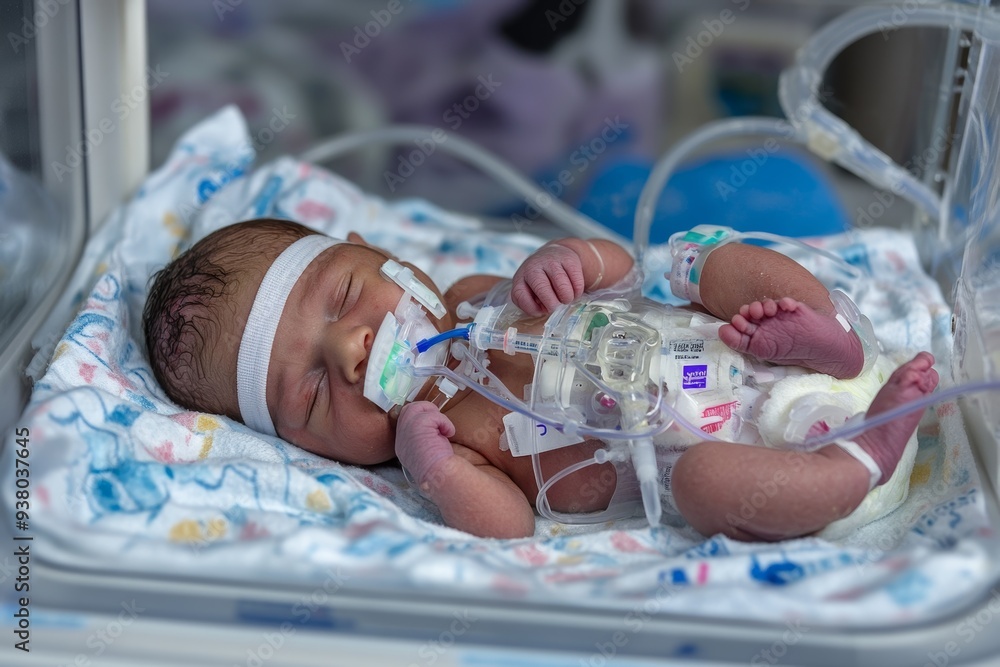
The medical care of premature babies is a very specialised affair that gobbles up a lot of resources. Really ill premature babies are cared for in units called ‘Neonatal Intensive Care Units’ (NICU), and the specialists trained to provide the most expert care for them are known as ‘Neonatologists’. There are not a lot of Neonatologists in the whole of Nigeria. Most of those who have not emigrated to greener pastures are ensconced in Teaching Hospitals and the higher-level private hospitals in major cities.
It is not just the small number and uneven distribution of specialist manpower and equipment that pose existential challenge to premature Nigerian babies. The cost of keeping a sick premature baby alive on a day-to-day basis is extremely high. This financial barrier to care for the premature has not previously been specifically addressed by succeeding governments, despite the advent of a supposedly compulsory National Health Insurance system.
The theme for this year’s celebration of World Prematurity Day is ‘Strong Start for Hopeful Futures’.
What does it mean to give a ‘Strong Start’ to the life of a little Nigerian in a village somewhere in Ogbomosho, or Zaria, who is running a risk of being born prematurely, one may ask? Is there any way of preventing a potential mother from giving birth to a premature baby?
Factors that may increase the chances of a mother having a premature baby include inadequately controlled diabetes and hypertension, obesity, smoking or the drinking of alcohol by the mother, malnutrition, stress, and multiple births such as are common in mothers who achieve conception through assisted reproductive procedures.
If a mother goes ahead to deliver a premature baby, how may such a baby still receive a ‘strong start’, as recommended by the WHO in its slogan?
Availability of specialised care and equipment, and access to such specialised healthcare, not just in terms of logistics but also in terms of being able to afford the cost, is an important enabler. Very small babies require to be treated in specially equipped incubators, and when they are sick, as they all too often are, the cost of keeping them alive in NICUs runs into several thousands of naira every hour.
Even in a relatively well-provisioned urban environment such as Lagos, the story plays out in a predictable fashion. The service is scarce. The cost is extreme. The baby dies. Such a dire outcome is even more predictable everywhere else in Nigeria, which is why the Infant Mortality Rate in Nigeria, at about 60 for every 1000 live births, is among the highest in the world.
In Lagos, the 2025 World Prematurity Day was marked at Lagos State University Teaching Hospital with a brainstorming and advocacy gathering organised in partnership with an Abiye Maternal and Child Health foundation, an NGO, and the Lagos State government.
But on the Nigerian scene, suddenly, there is one bright glimmer of hope that has failed so far to receive adequate public attention as a potential game-changer.
The highly expensive care of small and sick babies is not routinely covered by the ‘basic’ Health Insurance promised to mothers and babies under the Basic Healthcare Provision Fund (BHCPF) created by the Nigerian National Health Act of 2014. In any case, most of the centres such as PHCs and General Hospitals which provide ‘basic’ care do not have the equipment or the expertise to look after sick premature babies. A pilot scheme has now been started known as the National Health Insurance Agency (NHIA) Financial Access to Comprehensive Emergency Obstetric and Neonatal Care Program. Under it, a Memorandum of Understanding has been signed with a private healthcare provider that enables sick premature babies from anywhere in Lagos to be referred for cost-free specialised emergency care at the Outreach Women and Children Care hospitals at their two locations at Osapa and Festac. The centres are super-specialised for Neonatology, and their outcomes are comparable to international standards.
It is merely the beginning of a process that needs to happen all over Nigeria, which is the removal of the financial cost and access barrier that stands between the sick little people of Nigeria and a new lease of life. It is a foot in a door that must urgently be thrown wide open. The process of scaling up neonatal care in an impactful and sustainable way will cost Nigeria, and Nigerians, a lot of money, and will involve the pooling of energies between public and private healthcare facilities.
But it can be done, and Nigeria should have sufficient self-confidence and love for its little citizens to go for it.
